Pecan Pie Cheesecake (Make-Ahead Thanksgiving Showstopper)
Affiliate disclosure: This article contains affiliate links. If you buy through them, we may earn a small commission at no extra cost to you. As an Amazon Associate I earn from qualifying purchases. Links go to Amazon search results for the product types we mention, not to specific products we have tested.
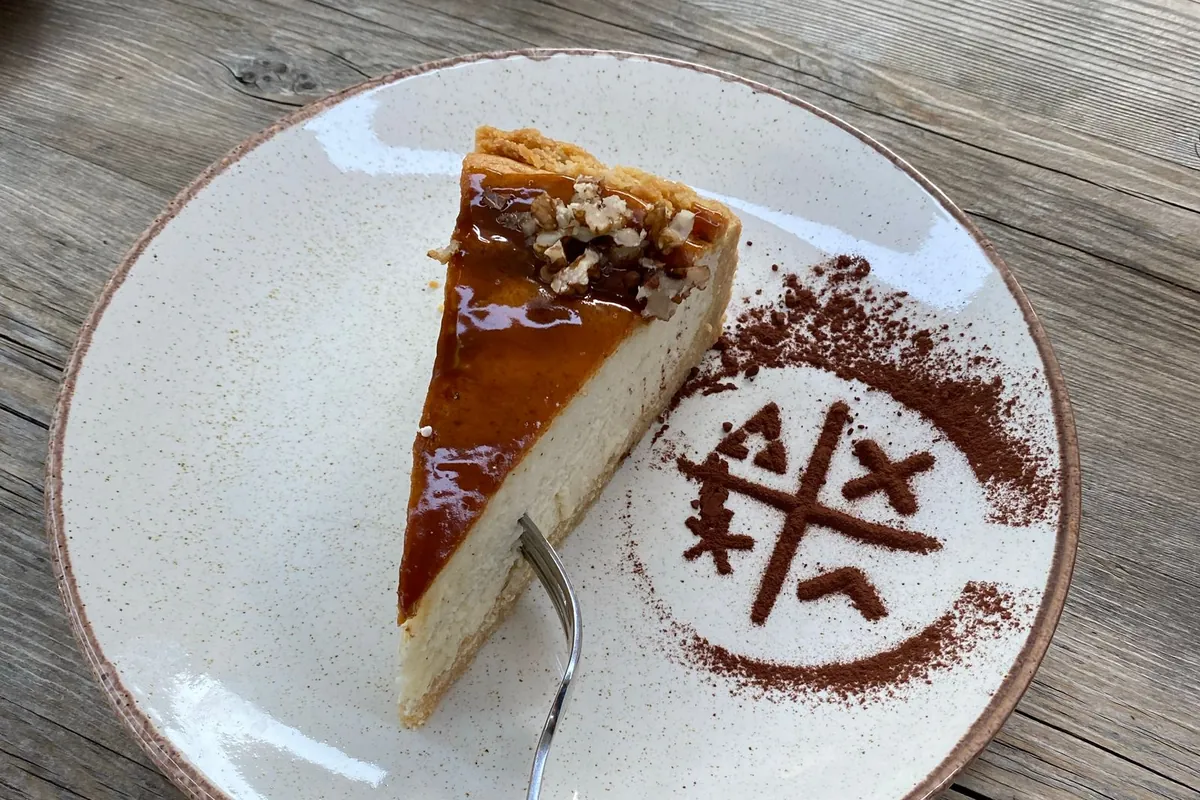
Can't decide between pecan pie and cheesecake for Thanksgiving? This pecan pie cheesecake gives you both: a brown sugar graham cracker crust, a smooth baked cheesecake and a thick layer of gooey caramel pecan topping that tastes like the filling of a pecan pie. It's a dessert that looks impressive, and because cheesecake needs a long chill, it's meant to be made ahead.
This guide walks through every stage, including the water bath, the slow cool that prevents cracks and the stovetop topping, so you can bake it with confidence a day or two before the holiday.
How this pecan pie cheesecake works
There are two common ways to make a pecan pie cheesecake. Some recipes bake a layer of raw pecan pie filling under or over the cheesecake batter. That works, but the two layers set at different rates, which makes timing tricky.
This version keeps the layers separate:
- The cheesecake is baked on its own in a water bath until just set, then chilled.
- The pecan topping is cooked on the stove, a quick brown sugar and cream caramel with toasted pecans, and spooned over the cold cheesecake.
You get the flavor and texture of pecan pie on top, with a reliably creamy cheesecake underneath.
Ingredients
Pan: 9-inch springform pan, plus a larger roasting pan for the water bath Oven: 350°F (175°C) for the crust, then 325°F (165°C) for the cheesecake Serves: 12 to 16
Graham cracker crust
- 1 3/4 cups (175 g) graham cracker crumbs
- 1/4 cup (53 g) packed light brown sugar
- 1/4 teaspoon fine salt
- 6 tablespoons (85 g) unsalted butter, melted
Brown sugar cheesecake filling
- 4 packages (8 oz / 226 g each) full-fat brick cream cheese, at room temperature
- 1 cup (213 g) packed light brown sugar
- 2 tablespoons (15 g) all-purpose flour
- 1/4 teaspoon fine salt
- 1/2 cup (113 g) full-fat sour cream, at room temperature
- 2 teaspoons vanilla extract
- 4 large eggs, at room temperature
Caramel pecan topping
- 1 1/2 cups (about 170 g) pecans, toasted and coarsely chopped
- 1/2 cup (113 g) unsalted butter
- 3/4 cup (160 g) packed light or dark brown sugar
- 1/4 cup (60 ml) heavy cream
- Pinch of fine salt
- 1 teaspoon vanilla extract
Use brick-style cream cheese, not the spreadable kind sold in tubs. Tub cream cheese has a softer texture and can leave the filling loose.
Step 1: Make the crust
Heat the oven to 350°F (175°C). Wrap the outside of the springform pan tightly in two layers of wide, heavy-duty foil, bringing it up the sides. This protects the cheesecake from water leaking in during the water bath.
Stir the crumbs, brown sugar, salt and melted butter until the mixture looks like wet sand. Press it firmly into the bottom of the pan, and a little way up the sides if you like. Bake for 10 minutes, then cool while you make the filling. Reduce the oven to 325°F (165°C).
Step 2: Mix the cheesecake filling
Smooth, lump-free batter starts with truly soft cream cheese. Take it out of the fridge 1 to 2 hours ahead.
- Beat the cream cheese on medium-low speed for about 2 minutes, until completely smooth. Scrape the bowl and paddle well.
- Add the brown sugar, flour and salt and beat on low until combined, about 1 minute. Scrape again.
- Mix in the sour cream and vanilla on low.
- Add the eggs one at a time on low speed, mixing only until each one disappears. Over-mixing at this stage whips in air, which can make the cheesecake puff up and crack.
Give the batter a final stir by hand with a spatula, reaching right to the bottom of the bowl, then pour it over the crust.
Step 3: Bake in a water bath
Set the foil-wrapped pan inside a large roasting pan and place both on the oven rack. Carefully pour hot water into the roasting pan until it comes about halfway up the side of the springform pan.
Bake for 60 to 75 minutes. The cheesecake is ready when the outer edge looks set and slightly puffed, and a circle in the middle, about 2 to 3 inches wide, still wobbles like set gelatin when you gently nudge the pan. It should not look liquid or wavy.
The water bath keeps the oven humid and the heat gentle, which helps the filling bake evenly without cracking or turning rubbery at the edges.
Step 4: Cool slowly
Sudden temperature changes are a common cause of cracks. Turn off the oven, prop the door open slightly and leave the cheesecake inside for 1 hour. Then lift it out of the water bath, remove the foil and run a thin knife around the edge so the cake can shrink away from the pan as it cools.
Cool to room temperature on a rack, then cover and refrigerate for at least 6 hours, or overnight. The cheesecake firms up as it chills.
Step 5: Make the caramel pecan topping
Make the topping after the cheesecake is fully chilled, or on the day you serve it.
- Toast the pecans on a baking sheet at 350°F (175°C) for 6 to 8 minutes, until fragrant. Let them cool, then chop coarsely.
- In a medium saucepan, melt the butter with the brown sugar, cream and salt over medium heat, stirring.
- Bring to a boil and let it bubble for 1 to 2 minutes, stirring, until slightly thickened. The mixture is very hot, so take care.
- Remove from the heat and stir in the vanilla and pecans.
- Let the topping cool for 10 to 15 minutes, until it's thick but still spoonable.
Spoon the topping over the chilled cheesecake, leaving a small border if you'd like some of the cream filling to show. Refrigerate for about 30 minutes to set the topping before slicing.
Tips for a smooth, crack-free cheesecake
- Room-temperature ingredients. Cold cream cheese, eggs or sour cream lead to lumps, and lumpy batter tempts you to over-mix.
- Low mixer speed. Use the paddle attachment on a stand mixer if you have one, and keep it on low after the cream cheese is smooth.
- Scrape often. Cream cheese sticks to the bottom of the bowl. Unmixed streaks show up as dense spots.
- Don't over-bake. The center should still wobble when you turn the oven off. It sets as it cools and chills.
- Cover cracks. If a crack appears, the pecan topping hides it completely, which is one of the nice things about this recipe.
How to slice cheesecake cleanly
Chill the cheesecake well. Dip a long, sharp knife into hot water, wipe it dry, make one cut and repeat for every slice. Pressing straight down through the topping, rather than sawing, keeps the pecans in place.
Make-ahead plan for Thanksgiving
- 2 days before: Bake the cheesecake, cool it slowly and refrigerate.
- 1 day before or the morning of: Make the pecan topping and spoon it over the cheesecake. Chill.
- Before serving: Release the springform ring and move the cheesecake to a serving plate. Slice straight from the refrigerator.
Cheesecake is made with eggs and dairy, so keep it refrigerated and don't leave it out at room temperature for more than 2 hours (USDA). Keep leftovers covered in the fridge and enjoy them within a few days.
To freeze, chill the plain cheesecake (without the topping) until firm, then wrap it well in plastic wrap and foil. Thaw overnight in the refrigerator, then add a fresh batch of topping.
Our holiday baking timeline and make-ahead plan shows how to fit a cheesecake around pies, rolls and other holiday baking.
Variations
These are optional twists on the base recipe. We haven't baked every version, so keep an eye on the texture.
- Gingersnap crust: Replace the graham crumbs with the same weight of gingersnap crumbs for a spicier base.
- Extra-vanilla topping: Add another 1/2 teaspoon of vanilla to the topping for a deeper caramel flavor.
- Chocolate drizzle: Drizzle melted dark chocolate over the set topping.
- Pecan pie cheesecake bars: Bake a half batch of crust and filling in a parchment-lined 8-inch square pan in a water bath, and start checking for doneness a good 15 to 20 minutes earlier.
For an easier pecan dessert that cuts into small squares, see our pecan pie bars. If you'd like a classic pecan pie or a pumpkin pie on the table as well, our Thanksgiving pie flavors list and classic pumpkin pie recipe are good companions.
Equipment that helps
- A 9-inch springform pan: Shop 9-inch springform pans on Amazon
- Heavy-duty wide foil for the water bath: Shop heavy-duty aluminum foil on Amazon
- A large roasting pan: Shop roasting pans on Amazon
- An offset spatula for spreading the topping: Shop offset spatulas on Amazon
Frequently asked questions
Do I have to use a water bath?
It's strongly recommended. The water bath gives gentle, even heat, which helps prevent cracks and a dry edge. If you skip it, place a pan of hot water on the rack below the cheesecake and expect a firmer edge.
How do I know when the cheesecake is done?
The edge looks set and slightly puffed, while a 2- to 3-inch circle in the center still wobbles like gelatin. It firms up as it cools and chills.
Can I make pecan pie cheesecake 2 days ahead?
Yes. Bake it up to 2 days ahead and refrigerate. Add the pecan topping the day before or the day you serve it, so the pecans stay crunchy.
Why did my cheesecake crack?
The most common reasons are over-mixing, over-baking and cooling too quickly. Mix on low, pull it while the center wobbles and cool it slowly in the turned-off oven.
Can I use pecan pie filling from a pecan pie recipe instead?
You can, but raw pecan pie filling and cheesecake batter set at different rates. The stovetop topping in this recipe avoids that problem and gives a similar gooey pecan layer.
A pecan pie cheesecake is a calm way to serve a showstopper: bake it early, chill it overnight and finish it with the caramel pecan topping when it suits you.
About the author: This recipe was written by the Warm Oven Bakes Editorial Team using established home-baking technique. Ovens vary, so judge doneness by the wobble in the center rather than the clock alone.
Read next: Thanksgiving Pie Flavors: 20 Classic and Creative Pies →