How to Host a Cookie Exchange Party (Rules, Ideas and Planning Checklist)
Affiliate disclosure: This article contains affiliate links. If you buy through them, we may earn a small commission at no extra cost to you. As an Amazon Associate I earn from qualifying purchases. Links go to Amazon search results for the product types we mention, not to specific products we have tested.
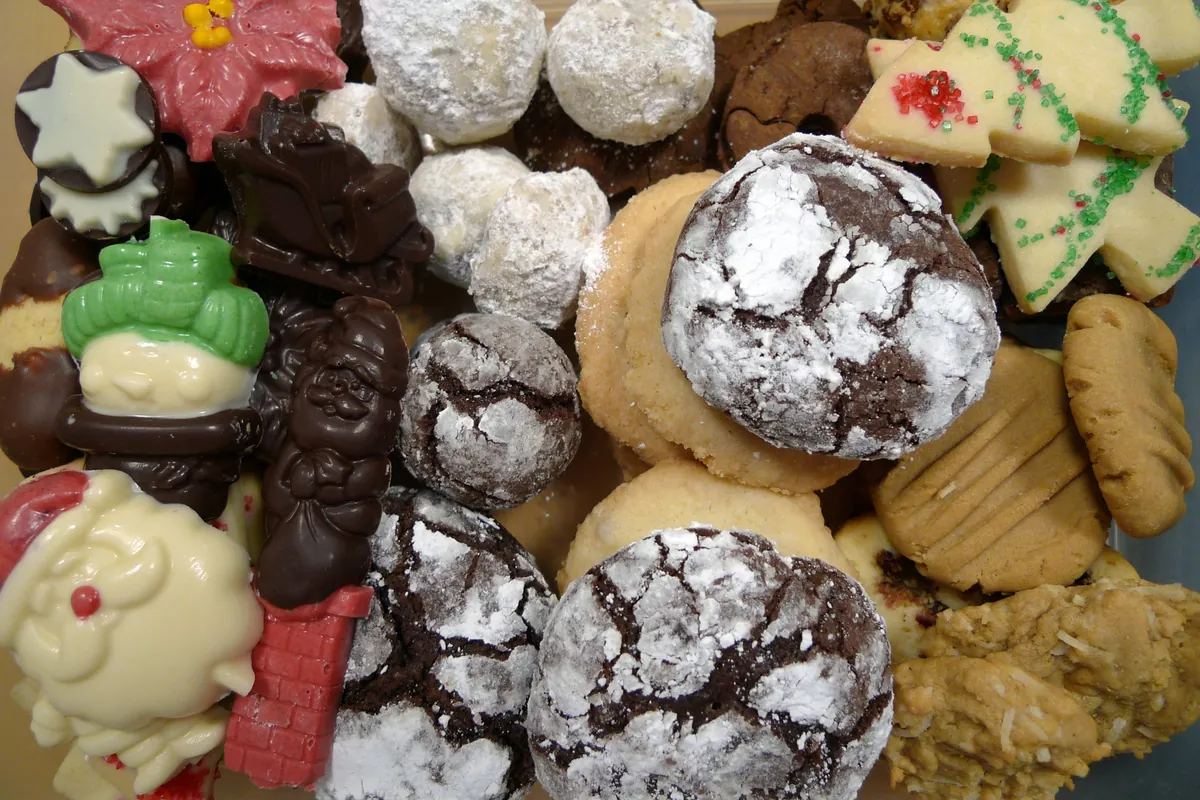
A cookie exchange turns one big baking session into a tin full of different Christmas cookies. Each guest bakes a batch of one kind, everyone swaps, and you all go home with variety you'd never have time to bake yourself. The party runs smoothly when the host sets a few clear rules early. These cookie exchange party ideas cover the guest list, the rules, the math, the setup and the small details that make a swap feel special.
How a cookie exchange works
The format is simple:
- The host invites a group and sets a date, usually a few weeks before Christmas.
- Each guest bakes a set number of one kind of cookie.
- Guests bring cookies packed for swapping, plus a few extra for tasting.
- At the party, everyone fills a container with an assortment to take home.
There are two common swap styles. In a per-guest swap, each baker brings one dozen for every other guest, packed in separate bags. In a table swap, everyone sets their cookies out on a table and guests walk around filling their own boxes. Table swaps are easier to manage and look more festive; per-guest swaps are faster at the party itself.
Step 1: Choose the size of your party
Six to twelve bakers is a comfortable range. With fewer than six, the variety feels thin. With many more than twelve, each guest has to bake a very large batch, and the table gets crowded.
If more people want to join, consider a "half-dozen" swap where each baker brings six cookies per guest instead of twelve.
Step 2: Pick the date and time
Early to mid-December works well for most groups. People still have time to bake, and the cookies arrive in time for gifting and holiday parties. Weekend afternoons suit families; weekday evenings suit work friends.
Send invitations about three weeks ahead, so bakers can plan and shop.
Step 3: Set the rules
Clear rules prevent awkward moments. Put them in the invitation:
- How many cookies to bring. For example, "one dozen for each guest, plus one dozen for tasting."
- Homemade only, or not. Many hosts ask for homemade cookies. Others welcome store-bought for busy guests. Decide and say so.
- One kind per baker. Ask guests to RSVP with their cookie so you don't end up with six batches of chocolate chip.
- Sturdy cookies. Ask for cookies that travel and stack, and steer guests away from cream-filled or soft-frosted cookies that need refrigeration.
- Labels and recipe cards. Ask each baker to bring a label listing the cookie name and main ingredients, plus recipe cards if they're happy to share.
- Containers. Tell guests whether to bring their own box or tin to take cookies home.
Step 4: Do the cookie math
The basic formula:
Cookies per baker = (number of guests × cookies per guest) + tasting cookies
| Bakers | Cookies per guest | Cookies each baker brings (plus tasting dozen) |
|---|---|---|
| 6 | 12 | 72, plus 12 = 84 (7 dozen) |
| 8 | 12 | 96, plus 12 = 108 (9 dozen) |
| 10 | 6 | 60, plus 12 = 72 (6 dozen) |
| 12 | 6 | 72, plus 12 = 84 (7 dozen) |
Including the baker's own share keeps the math simple: everyone takes home the same number of cookies, including some of their own.
Large batches are much easier with a recipe that scales well. Our guide to easy Christmas cookies to make in bulk uses one dough for several cookie styles, and our list of cookies for a cookie exchange covers sturdy, stackable choices.
Step 5: Send the invitation
A good invitation covers:
- Date, time and address
- The swap style (table or per-guest)
- How many cookies to bring
- The RSVP deadline and a request to name their cookie
- Whether to bring a container
- A note about labeling allergens
You can send a text or email invitation, or design a printable card. Keep a shared list of claimed cookies so guests can see what's taken.
Step 6: Plan for allergies
Food allergies are common, and at a swap people take home cookies they didn't make. Ask every baker to label their cookies with the main ingredients and common allergens. In the US, the FDA lists nine major food allergens: milk, eggs, fish, crustacean shellfish, tree nuts, peanuts, wheat, soybeans and sesame.
Practical steps:
- Ask guests with allergies to tell you when they RSVP.
- Set nut-containing cookies at one end of the table with their own tongs.
- Provide separate serving tongs for every plate.
- Remind guests that a home kitchen isn't allergen-free, even if a recipe is.
Step 7: Set up the swap table
A well-arranged table makes the swap feel like a bakery:
- Cover the table with a cloth or kraft paper you can write on. Guests can write the cookie name and baker beside each plate.
- Use platters or trays of different heights. Cake stands and upturned boxes under a cloth add levels.
- Add tongs and gloves for hygienic serving.
- Put labels in front of each plate. Name, baker and allergens.
- Keep a tasting station separate from the swap cookies, so the take-home supply isn't eaten first.
- Stock extra containers. Someone always forgets theirs.
Step 8: Packaging ideas
Packaging is where the swap feels special. Options include:
- Cookie boxes with windows. They show off the assortment and stack easily.
- Tins. Sturdy and reusable, good for cookies that will travel or be given as gifts.
- Cellophane bags tied with ribbon. Useful for per-guest swaps.
- Parchment or wax paper between layers. Stops iced cookies from sticking.
- Mini cupcake liners. Keep small, delicate cookies separate inside a box.
If guests plan to pass their cookies on as gifts, our guide to Christmas cookies for gifts covers packing so cookies stay fresh, and our holiday baking gift basket ideas has more ways to present them.
Step 9: Plan the party flow
A simple running order for a two- to three-hour swap:
- Arrival (30 minutes). Guests set out cookies, add labels and grab a drink.
- Tasting (30 to 45 minutes). Everyone samples from the tasting station and chats.
- The swap (20 to 30 minutes). Walk around the table in turns, or hand out per-guest bags.
- Wrap-up. Share recipe cards, pack up leftovers and photograph the table.
If you want a light activity, a "guess the secret ingredient" card or a vote for the most festive-looking plate keeps things friendly without turning the swap into a contest.
Step 10: Food and drinks
Guests will be eating cookies, so balance the sweetness:
- A savory snack board or simple sandwiches
- Hot cocoa, coffee and tea
- Water and something sparkling
Keep the menu simple. The cookies are the star.
Tips for guests
Share these in the invitation or a follow-up message:
- Bake ahead. Most butter and drop cookies can be baked a few days ahead and kept airtight, or frozen for longer. Our holiday baking timeline has a make-ahead schedule.
- Keep sizes even. Use a scoop for drop cookies so every guest gets the same size.
- Let icing dry completely before packing, so cookies don't stick together.
- Bring a few extra. Breakage happens on the way.
- Bringing children? Our easy Christmas cookies for kids suit young bakers who want to bring their own batch.
Shopping list for hosts and bakers
- Cookie boxes with windows: Shop cookie boxes on Amazon
- Christmas cookie tins: Shop Christmas cookie tins on Amazon
- Food-safe labels or tent cards: Shop food label tent cards on Amazon
- Serving tongs: Shop mini serving tongs on Amazon
- Tiered serving trays: Shop tiered serving trays on Amazon
- Cookie scoops for even sizes
Frequently asked questions
How many cookies should each person bring to a cookie exchange?
A common rule is one dozen per guest plus a dozen for tasting. With eight bakers, that's about nine dozen each. For larger groups, switch to half a dozen per guest.
What are the rules for a cookie exchange?
Typical rules are: bake one kind of cookie, bring the agreed amount, label ingredients and allergens, choose sturdy cookies and bring a container to take your assortment home.
What cookies should you not bring to a cookie swap?
Avoid cookies that need refrigeration, such as cream-filled or cream-cheese-frosted cookies, and very fragile cookies that break in transit.
How far ahead should I send cookie exchange invitations?
About three weeks ahead gives bakers time to choose a recipe, shop and bake.
Can I host a cookie exchange online?
Yes. Bakers can mail cookies to each other or drop them at doorsteps, then meet on a video call to share recipes. Choose cookies that ship well and pack them carefully.
About the author: This guide was written by the Warm Oven Bakes Editorial Team using established home-baking technique. Cookie counts are planning suggestions; adjust them to your group.
Read next: 25 Christmas Cookie Recipes for a Cookie Exchange (Sturdy, Scalable and Box-Ready) →